Clinical Excellence in Equine Orthopedics: Field Report on Delphivet Implementation at Méheudin Equine Clinic
In collaboration with Dr. Antoine Lechartier and Dr. Matteo Baglioni.
Introduction
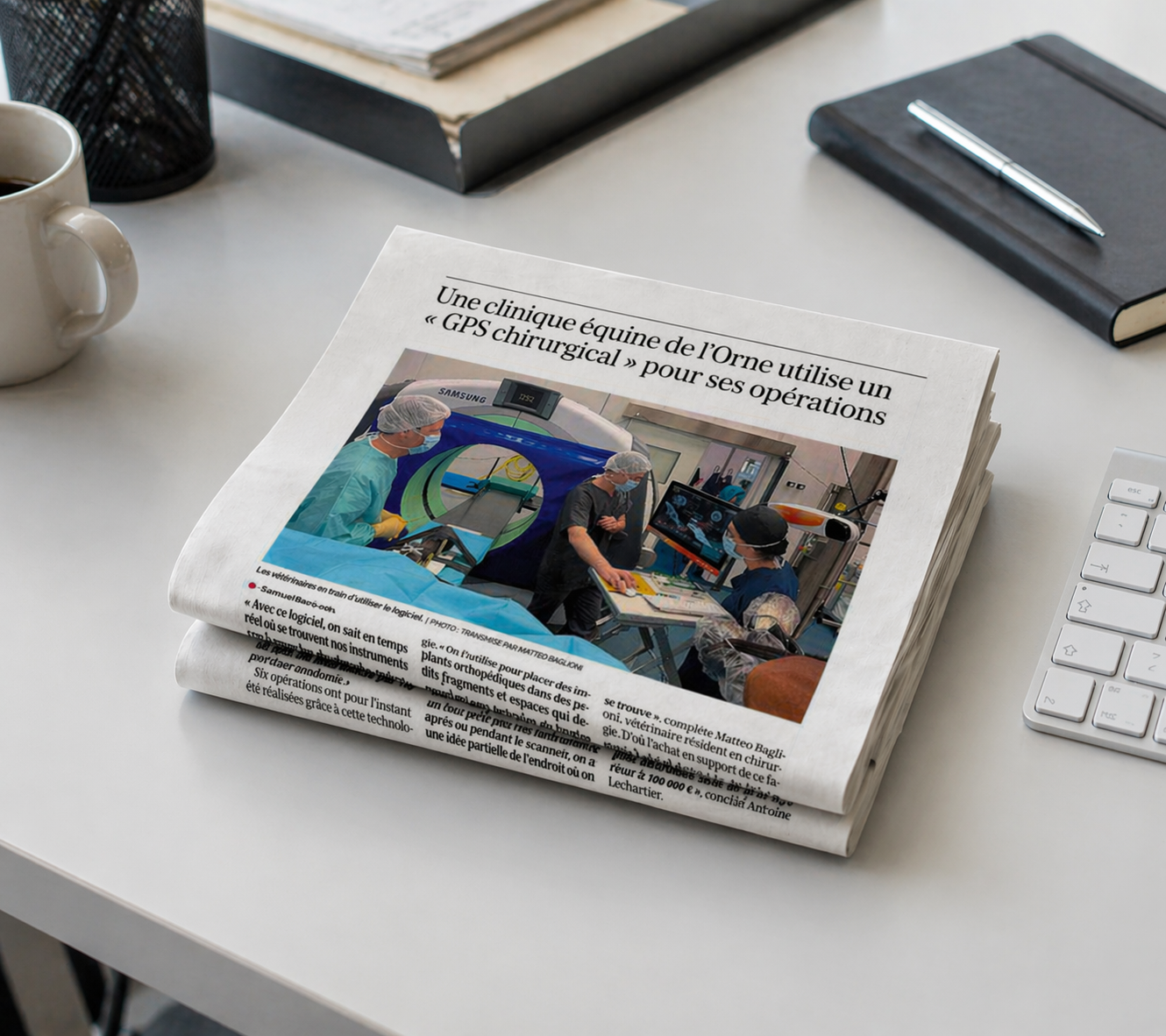
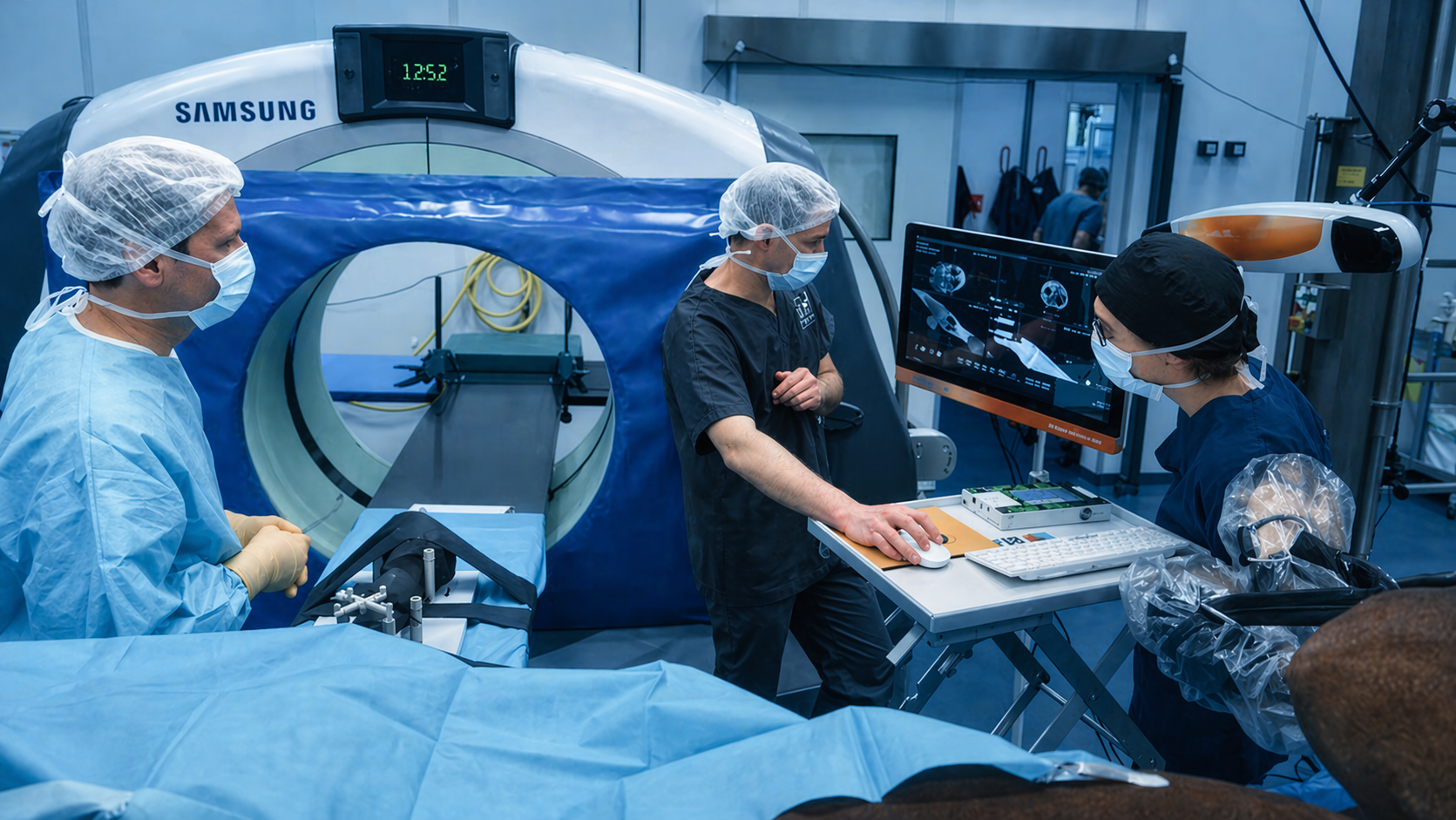
The integration of advanced digital solutions in veterinary medicine is establishing new benchmarks for precision and patient safety in complex procedures. Recently, the prominent French publication Ouest-France highlighted a significant milestone: the implementation of our surgical navigation system at the Méheudin Equine Clinic in Orne, France, led by Dr. Antoine Lechartier. This feature marks a pivotal transition as the technology moves from clinical validation to routine application in real-world surgical cases.
The “Surgical GPS”: Millimetric Precision in Equine Orthopedics
The article describes the device as a “Surgical GPS”, a metaphor that accurately captures the essence of our technology. Precision in equine orthopedics is often a matter of sub-millimetric margins, particularly when addressing small bone fragments or complex articular surfaces. In regions such as the carpus, phalanges, or the navicular bone, the margin for error is virtually non-existent: a displacement of just 1-2 mm in screw trajectory can compromise joint congruity, leading to secondary osteoarthritis or implant failure.
Key Clinical Advantages:
• Real-Time 3D Visualization: The software reconstructs the patient’s anatomy in a threedimensional space, allowing the surgeon to track the exact position of surgical instruments relative to the bone structure in real-time.
• Minimally Invasive Approaches: Navigated guidance allows for smaller incisions and less soft-tissue disruption, promoting faster post-operative recovery.
• Enhanced Safety Protocols: By utilizing optical tracking, the need for repeated intraoperative X-ray scans is significantly reduced. This minimizes radiation exposure for both the veterinary staff and the patient.
• Reduced Anesthesia Time: Increased procedural precision leads to shorter operating times, a critical factor in mitigating the risks associated with equine general anesthesia.
From Implementation to Clinical Excellence
Following a rigorous training phase, the team at Méheudin, has successfully transitioned to live surgical cases. The adoption of “navigated surgery” represents more than a technological upgrade; it is a paradigm shift toward a data-driven, precision-oriented approach in veterinary medicine.
As Dr. Lechartier noted in the feature, while the technology is already established in high-end human neurosurgery and spinal procedures, its entry into the veterinary market is now becoming more accessible, paving the way for a new era of equine care.
Conclusion
Our mission is to empower veterinary professionals with the tools necessary to achieve clinical excellence. The success at the Méheudin Equine Clinic reinforces our belief that computerassisted surgery is no longer the future, it is a present-day necessity for centers of excellence worldwide.